Lecture Code : JS08-S1
Session Name : Asian Pacific Nephrology Forum
Session Topic : Asian Pacific Nephrology Forum
Date & Time, Place : June 13 (Sat) / 08:30-10:10 / Room 4 (203), 2F
Japanese Kidney Disease Registry and Cohort Study
Nobuhiro Nishibori
Nagoya University, Japan
Background:
The COVID-19 pandemic has substantially affected clinical practice, including indications for renal biopsy. The Japan Renal Biopsy Registry (J-RBR) is a nationwide, web-based registry that was revised in 2018. This study aimed to describe the epidemiology of kidney diseases diagnosed by renal biopsy in Japan and to evaluate changes before and after the COVID-19 pandemic.
Methods:
We analyzed the J-RBR database from January 2018 to December 2024. Clinical and histopathological data at the time of biopsy were used for epidemiological analyses. Participants were categorized into pediatric (<19 years) and adult (≥19 years) groups; adults were further divided into younger (19–64 years) and older (≥65 years) subgroups. The period up to 2020 was defined as pre-COVID-19 and from 2021 onward as post-COVID-19. Trends were assessed using the Cochran–Armitage test and logistic regression analysis.
Results:
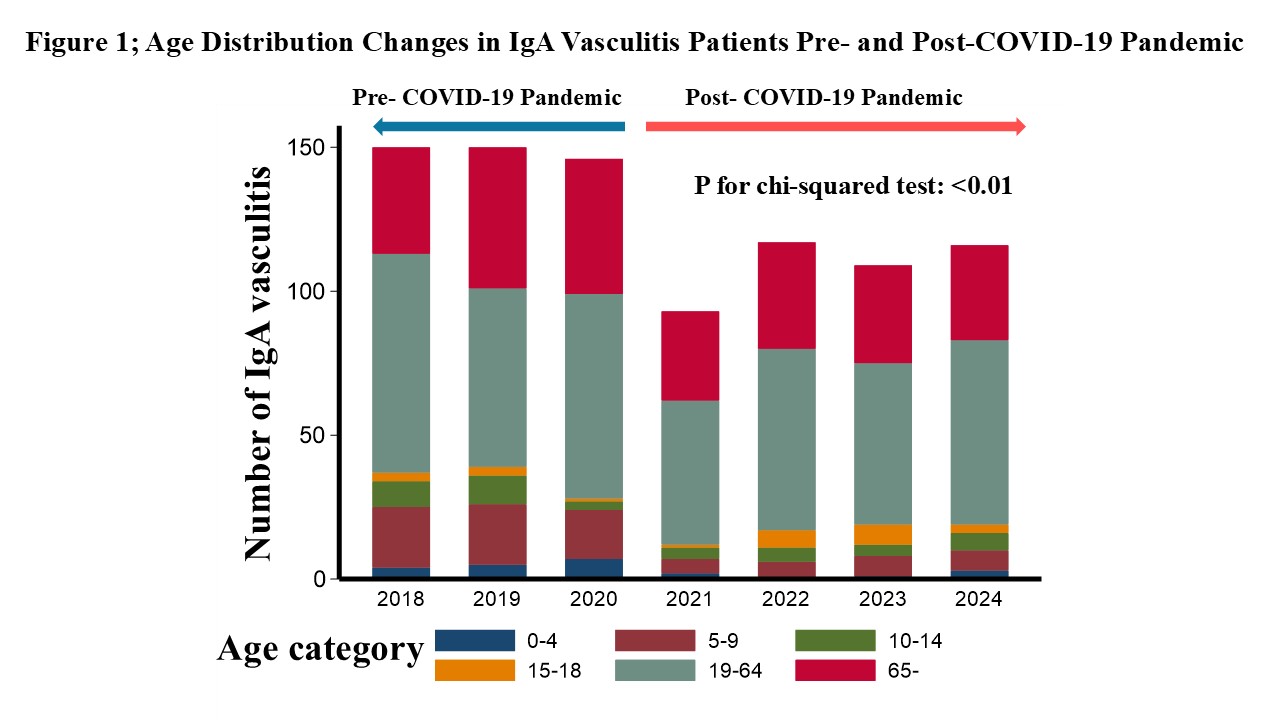
A total of 27,897 native kidney biopsies were analyzed, with the highest frequency observed in patients in their 70s (21.4%). IgA nephropathy was the most common diagnosis across all age groups. In younger adults, IgA nephropathy (38%), minimal change disease (7%), and lupus nephritis (6%) predominated, whereas in older adults, ANCA-associated vasculitis or anti-GBM glomerulonephritis (15%), membranous nephropathy (14%), and IgA nephropathy (14%) were most frequent. In pediatric patients, IgA nephropathy (36%), minimal change disease (17%), and IgA vasculitis (8%) were predominant. Overall biopsy numbers remained stable. Focal segmental glomerulosclerosis showed an increasing trend, while minimal change disease and IgA vasculitis decreased. Notably, IgA vasculitis markedly declined after the pandemic, particularly in children under 10 years.
Conclusions:
This nationwide study demonstrates temporal changes in kidney biopsy diagnoses in Japan. In addition to long-term demographic trends, short-term changes associated with the COVID-19 pandemic may have influenced disease patterns.
Keywords: Renal biopsy, Japan Renal Biopsy Registry (J-RBR), Glomerulonephritis, Epidemiology, COVID-19
Figure1.jpg