Lecture Code : JS01-S4
Session Name : KSN-TSN-JSDT Joint Symposium
Session Topic : KSN-TSN-JSDT Joint Symposium
Date & Time, Place : June 12 (Fri) / 08:30-10:10 / Auditorium, 3F
Depression in Hemodialysis Patients
Yoichi Ohtake
Takeo Clinic, Body Mind Clinic, Japan
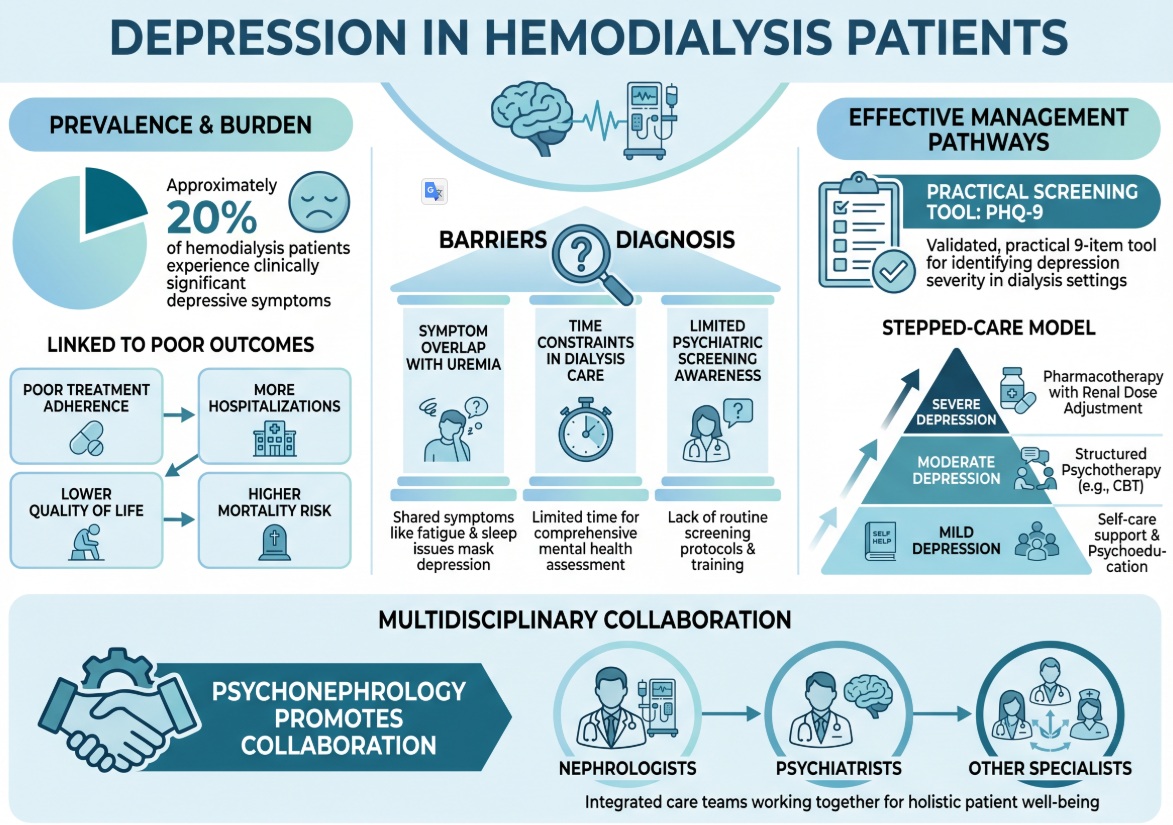
Depression is one of the most prevalent yet underrecognized psychiatric comorbidities among patients undergoing maintenance hemodialysis. Epidemiological studies report that approximately 20% of hemodialysis patients experience clinically significant depressive symptoms, a prevalence substantially higher than that observed in the general population. Depression in this population is associated with poor treatment adherence, increased hospitalization, diminished quality of life, and elevated mortality risk, making it a critical target for clinical intervention.
Despite its clinical significance, depression in hemodialysis patients remains underdiagnosed and undertreated. Several factors contribute to this gap, including the overlap between uremic symptoms and depressive symptoms, time constraints during routine dialysis care, and insufficient awareness among nephrology professionals regarding psychiatric screening. The emerging field of psychonephrology seeks to bridge this gap by integrating mental health assessment and intervention into standard nephrology practice.
This presentation will provide an overview of the epidemiology, screening, and clinical impact of depression in hemodialysis patients. We will introduce the PHQ-9 as a validated screening instrument suitable for the dialysis setting and discuss its practical utility. Furthermore, we will present a stepped-care model framework that provides interventions tailored to the severity of depressive symptoms. This model ranges from self-care support and psychoeducation for mild cases, through structured psychotherapy for moderate cases, to pharmacotherapy with appropriate dose adjustment for impaired renal clearance in severe cases. Finally, we will propose a multidisciplinary care model grounded in psychonephrology principles, emphasizing collaboration among nephrologists, psychiatrists, psychologists, and dialysis staff to improve mental health outcomes in this vulnerable population.
Keywords: psychonephrology, hemodialysis, depression, PHQ-9, stepped-care model
タイトルなし.jpg