Lecture Code : DN02-S3
Session Name : Dialysis Nurse Course 2
Session Topic : Dialysis Nurse Course 2
Date & Time, Place : June 14 (Sun) / 10:40-12:40 / Room 1+2 (GBR 101+102), 1F
투석 중 발생 가능한 합병증과 응급대처법
Eunah Choi
Asan Medical Center, Republic of Korea
Hemodialysis is a life-sustaining therapy for patients with end-stage renal disease; however, it is frequently associated with acute complications that may significantly impact patient outcomes. Among these, intradialytic hypotension (IDH), circuit clotting, hypersensitivity reactions, and air embolism represent critical events requiring prompt recognition and management.
Intradialytic hypotension is the most common complication and is primarily associated with an imbalance between ultrafiltration rate (UFR) and plasma refill capacity. Excessive ultrafiltration leads to rapid intravascular volume depletion, resulting in reduced cardiac output and impaired organ perfusion. Repeated episodes of IDH may contribute to myocardial stunning and cumulative end-organ ischemia, ultimately increasing cardiovascular morbidity and mortality. Therefore, early detection strategies and standardized intervention protocols are essential to minimize hemodynamic instability.
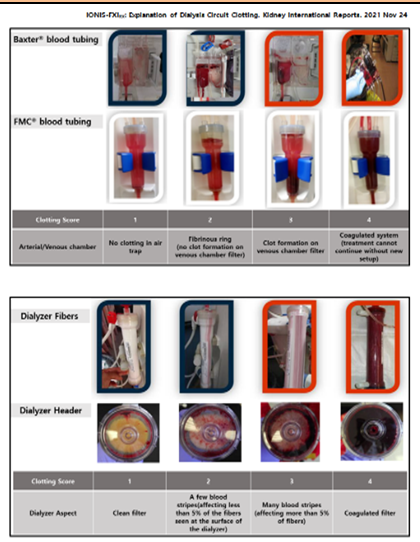
Circuit clotting remains another important challenge, particularly in patients with limited or no anticoagulation. It leads to blood loss, decreased dialysis adequacy, and increased healthcare burden. Standardized clotting assessment tools and appropriate anticoagulation strategies, including saline infusion protocols, can help mitigate this risk.
Hypersensitivity reactions during hemodialysis are often related to dialyzer membrane biocompatibility. The use of polysulfone membranes and potential leaching of substances such as polyvinylpyrrolidone (PVP) may trigger complement activation and inflammatory responses. Understanding these mechanisms is crucial for early diagnosis and appropriate management, including prompt discontinuation of dialysis in severe cases.
Although rare, air embolism is a potentially fatal complication that is primarily preventable. It is often associated with human factors, such as improper handling of vascular access or circuit disconnections. Strict adherence to safety protocols, including adequate priming, secure line connections, and vigilant monitoring, is essential to prevent such events.
In conclusion, most acute complications during hemodialysis are preventable with standardized protocols, continuous monitoring, and effective communication among healthcare providers. A proactive approach to patient safety is essential to improve clinical outcomes and ensure high-quality dialysis care.
Keywords: Hemodialysis Complications, Intradialytic Hypotension, Extracorporeal circuit clotting , Hypersensitive reaction, Air embolism
IDH nursing intervention.png
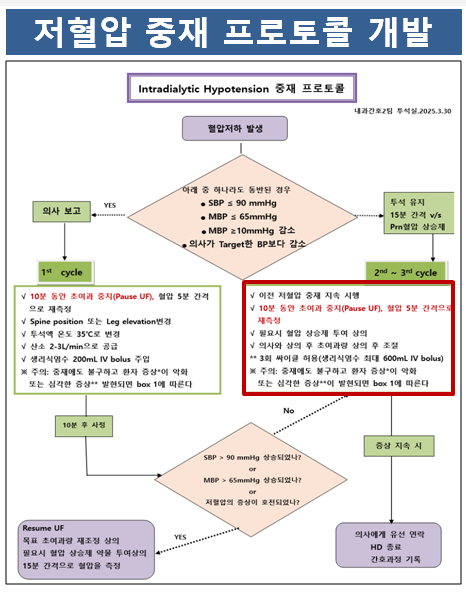
IDH nursing intervention.png