Abstract Type : Oral presentation
Abstract Submission No.: A-0871
Abstract Topic : Dialysis
Green Dialysis Engineering: Development of a Water and Power Reduction Mode for Portable Reverse Osmosis Systems in Dialysis Care
Seong Geun Kim1, Dong Ki Kim2
1Department of Internal Medicine-Nephrology, Gangnam Severance Hospital, Korea, Republic of
2Department of Internal Medicine-Nephrology, Seoul National University Hospital, Korea, Republic of
Objectives : Hemodialysis, a highly resource-intensive therapy with substantial water and energy consumption, is largely driven by reverse osmosis (RO) systems. Portable RO units are essential in intensive care units, isolation wards, emergency settings, and home hemodialysis. However, they consume water and electricity to maintain system readiness even during idle standby periods, representing a modifiable source of environmental burden.
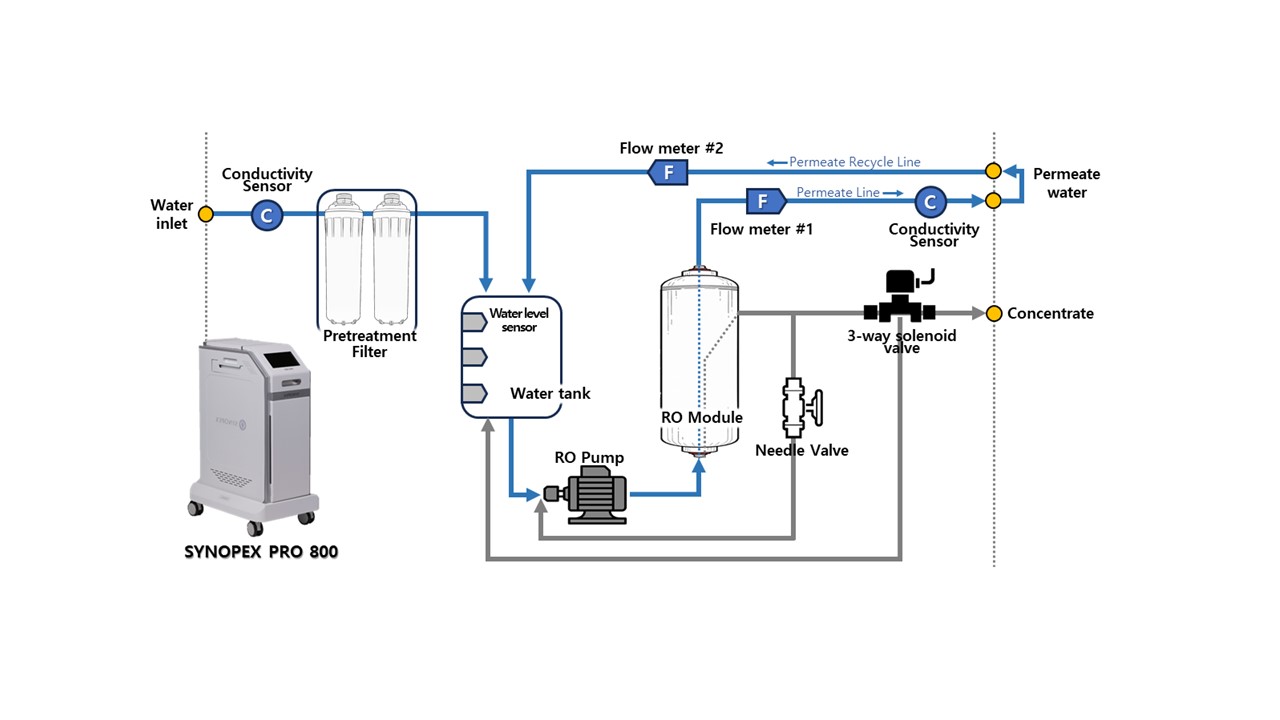
Methods : We developed an automatic Water and Power Reduction Mode (WPRM) for a portable RO system that detects idle standby conditions and dynamically reduces the pump speed while maintaining minimal internal circulation. Three WPRM configurations were evaluated for concentrate water handling. Water consumption, electrical power consumption, reactivation time to target conductivity (≤5 µS/cm), and dialysis water quality were assessed under controlled experimental conditions. Physicochemical parameters and endotoxin levels were analyzed according to ISO/AAMI standards.
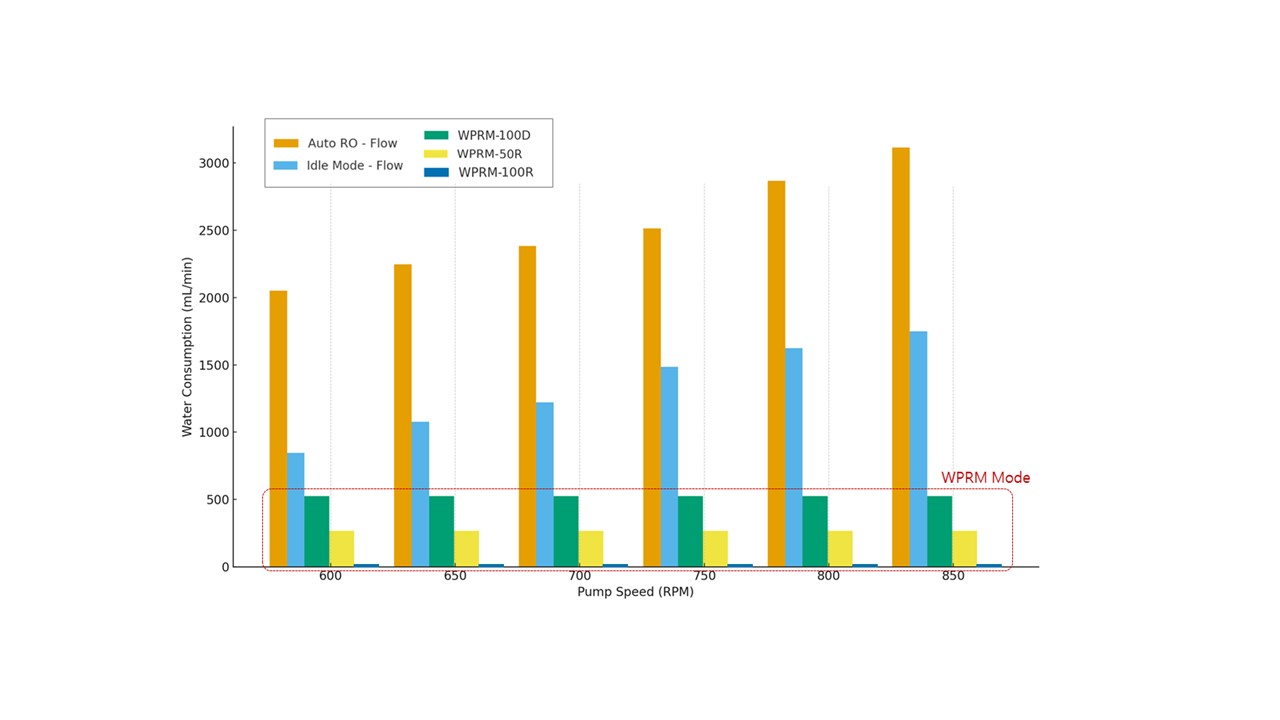
Results : Compared to conventional idle standby operation, the WPRM reduced electrical power and water consumption by up to 74% and 82%, respectively, depending on the configuration. The WPRM-50R mode achieved an optimal balance, halving the water consumption relative to full drainage while preserving rapid conductivity recovery. Across all WPRM modes, the dialysis water quality, including microbiological safety, consistently met international standards.
Conclusions : The proposed WPRM provides a practical infrastructure-level solution to reduce unnecessary water and energy consumption in portable RO systems without compromising water quality or operational readiness. By decreasing the dependence on continuous utilities during idle periods, this approach aligns with green nephrology principles and may enhance the resilience of dialysis services, particularly in decentralized, resource-limited, or disaster-prone settings.
Methods : We developed an automatic Water and Power Reduction Mode (WPRM) for a portable RO system that detects idle standby conditions and dynamically reduces the pump speed while maintaining minimal internal circulation. Three WPRM configurations were evaluated for concentrate water handling. Water consumption, electrical power consumption, reactivation time to target conductivity (≤5 µS/cm), and dialysis water quality were assessed under controlled experimental conditions. Physicochemical parameters and endotoxin levels were analyzed according to ISO/AAMI standards.
Results : Compared to conventional idle standby operation, the WPRM reduced electrical power and water consumption by up to 74% and 82%, respectively, depending on the configuration. The WPRM-50R mode achieved an optimal balance, halving the water consumption relative to full drainage while preserving rapid conductivity recovery. Across all WPRM modes, the dialysis water quality, including microbiological safety, consistently met international standards.
Conclusions : The proposed WPRM provides a practical infrastructure-level solution to reduce unnecessary water and energy consumption in portable RO systems without compromising water quality or operational readiness. By decreasing the dependence on continuous utilities during idle periods, this approach aligns with green nephrology principles and may enhance the resilience of dialysis services, particularly in decentralized, resource-limited, or disaster-prone settings.
green_figure1.jpg
green_figure1.jpg