Abstract Type : Oral presentation
Abstract Submission No.: A-0815
Abstract Topic : Pediatric Nephrology + Inherited Kidney Disease
Sleep Disorder and Health-Related Quality of Life in Pediatric Chronic Kidney Disease
Dina Sallam
Department of Pediatrics-Nephrology, Faulty of Medicine, Ain Shams University, Cairo, Egypt , Egypt
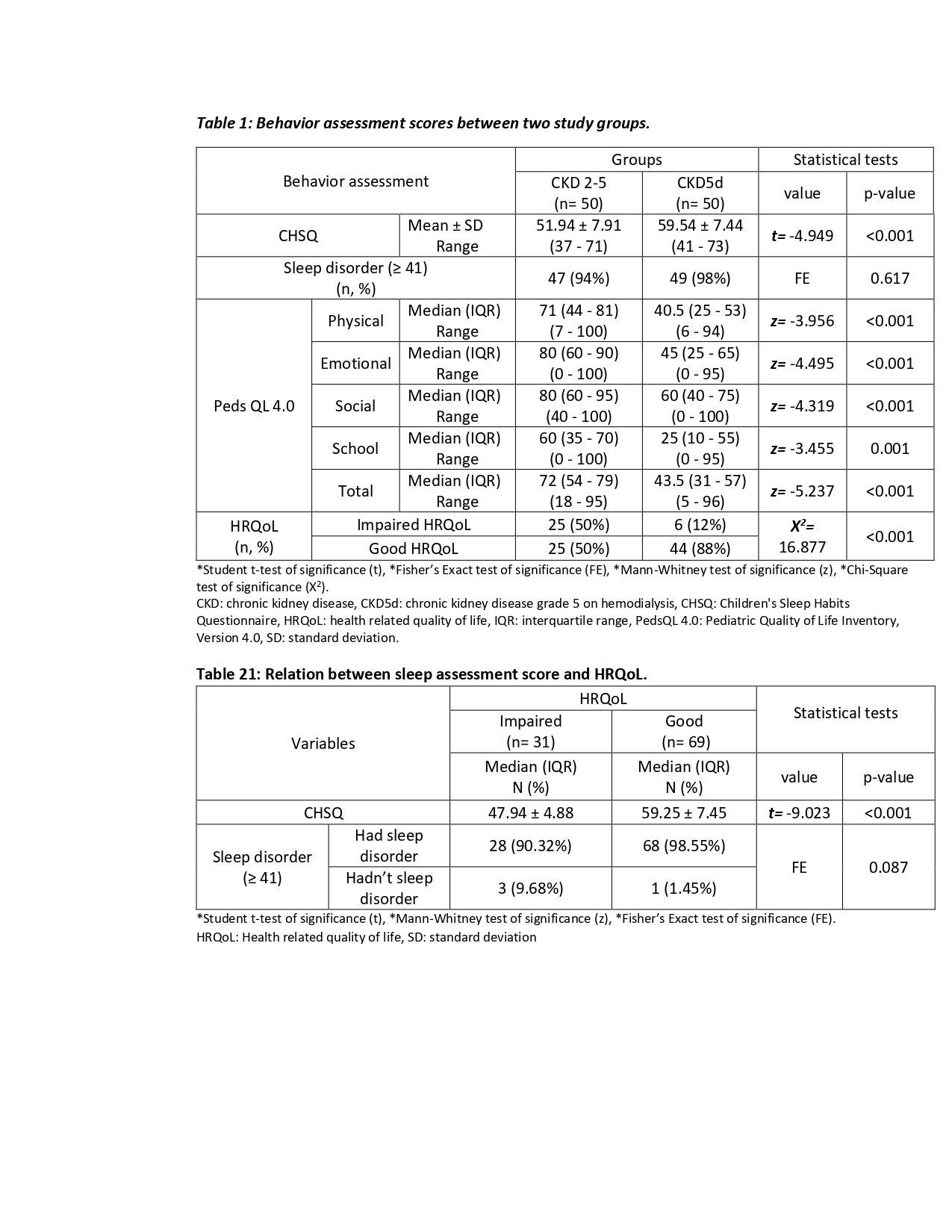
Case Study : Children with chronic kidney disease (CKD) often experience reduced health-related quality of life (HRQoL) and sleep disturbances, especially in advanced stages or on hemodialysis. Sleep problems can further impair daily functioning, emotional well-being, and cognition. This study aimed to assess the prevalence of sleep disorders and HRQoL in pediatric CKD patients and examine the impact of CKD stage and treatment modality on these outcomes. Mthods: across-sectional study included 100 children and adolescents (5–18 years) with CKD stages 2–5 at our Pediatric Dialysis and Nephrology Unit, Children’s Hospital,Cairo-Egypt. Participants were grouped into conservatively managed CKD (stages 2–5) and stage 5 on hemodialysis ≥6 months. All underwent clinical, anthropometric, and laboratory assessments, including CBC, electrolytes, metabolic bone profile, and eGFR (Schwartz formula). Sleep quality and HRQoL were evaluated using the Arabic Children’s Sleep Habits Questionnaire and PedsQL 4.0, respectively. Results: The mean age was 10.88 ± 2.4 years, with 55% males, and most patients (79%) were in CKD stage 5. Children on HD had significantly lower weight and height SDS and higher systolic blood pressure than those on conservative management. Sleep disorders were highly prevalent (96%), and 31% of patients had impaired HRQoL, particularly in school and physical functioning domains. HD patients showed significantly poorer sleep quality and lower HRQoL across all domains. Impaired HRQoL was associated with shorter CKD duration, CKD stage, higher anthropometric SDS, lower iPTH and ALP levels, and worse kidney function. Multivariate analysis identified poor sleep quality was the only independent predictor of impaired HRQoL (OR = 0.76; 95% CI: 0.66–0.86; p < 0.001). Conclusion: Sleep disturbances are highly prevalent in pediatric CKD and are the strongest predictor of impaired HRQoL, especially in children on hemodialysis. Addressing sleep problems may be key to improving quality of life, regardless of disease severity.
Table KSN.jpg