Abstract Type : Oral presentation
Abstract Submission No.: A-0377
Abstract Topic : Renal Conservative Care + Geriatric Nephrology + Sarcopenia
Residential Instability and Clinical Outcomes in Older Adults With Chronic Kidney Disease: A Multicenter Prospective Cohort Study
Jin Kyung Kwon1, Yaerim Kim1, Jin Hyuk Paek1, Kyubok Jin1, Seungyeup Han1, Soon Hyo Kwon2, Sung Jin Chung3, Yu Ah Hong4, Sung Joon Shin5, Woo Yeong Park1
1Department of Internal Medicine-Nephrology, Keimyung University Dongsan Medical Center, Korea, Republic of
2Department of Internal Medicine-Nephrology, Soonchunhyang University Seoul Hospital, Korea, Republic of
3Department of Internal Medicine-Nephrology, The Catholic University of Korea Yeouido St. Mary's Hospital , Korea, Republic of
4Department of Internal Medicine-Nephrology, The Catholic University of Korea Daejeon St. Mary's Hospital , Korea, Republic of
5Department of Internal Medicine-Nephrology, Dongguk University Ilsan Hospital, Korea, Republic of
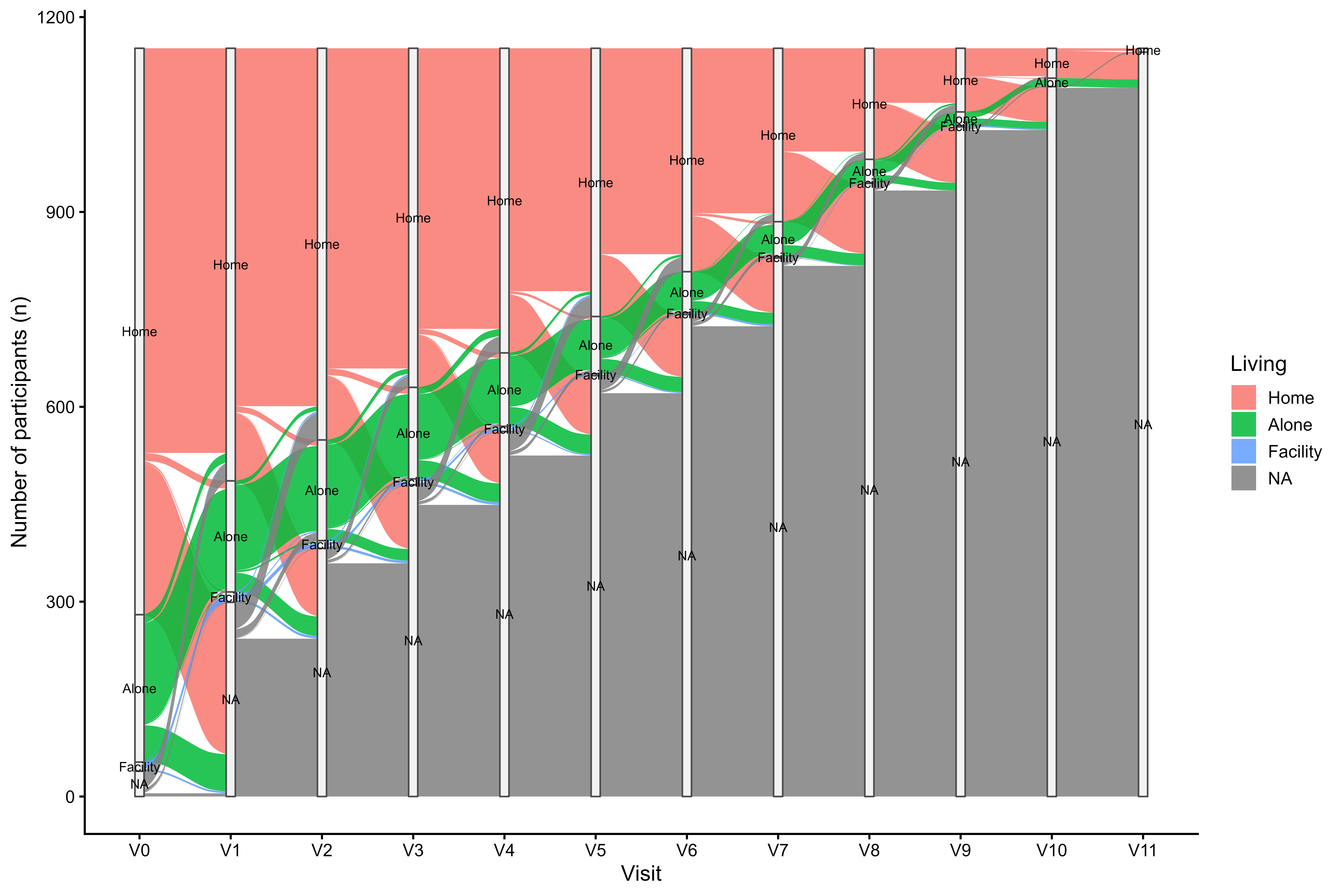
Methods : We used a multicenter, prospective cohort of 1,198 individuals aged over 70 years with CKD enrolled across 17 centers. Residential trajectory was categorized as “Home stable”, “Alone stable”, “Home to Alone”, “Alone to Home”, “Bidirectional”, and “Facility” (including hospitals and other institutions). Employment status was classified by presence of employment history. Primary outcomes were kidney function decline (≥40% decline in eGFR or initiation of kidney replacement therapy) and functional decline (≥2-point decrease in K-ADL). Secondary outcomes were all-cause hospitalization, fracture, and cardiovascular events. Associations were assessed using discrete-time logistic regression adjusted with demographic and clinical covariates.
Results : The participants’ mean age was 78.09 years, and 58.6% were men. Using “Home stable” group as the reference, residential trajectories were not associated with kidney function decline or cardiovascular events. The "Facility" group had higher odds of functional decline (OR 6.47, 95% CI 3.67–11.41), hospitalization (OR 4.74, 95% CI 2.22–10.12), and fracture (OR 4.08, 95% CI 1.28–13.04). For hospitalization, "Alone to Home" (OR 2.70, 95% CI 1.09–6.67) and "Alone Stable" (OR 1.62, 95% CI 1.04–2.53) were associated with higher odds. For fracture, the "Bidirectional" group showed higher odds (OR 4.05, 95% CI 1.49–11.00). Employment history was not significantly associated with any outcome.
Conclusions : In older CKD patients, residential trajectory were associated with adverse clinical outcomes—particularly hospitalization and fracture. Residential instability may serve as a pragmatic risk marker to identify vulnerable older CKD patients and inform targeted supportive interventions.
260304_OldAge_Fig1.png