Abstract Type : Oral presentation
Abstract Submission No.: A-0329
Abstract Topic : Glomerular and Tubulointerstitial Disorders
Single-Cell Transcriptomic and Clonal Profiling Reveals Shared Signatures of Gd-IgA1 Stratification and B-Cell Clonal Expansion in IgA Nephropathy
Jinsun Lee1, Hyunah Ku2, Jee-Yeon Ryu3, Sehoon Park1, Dong Ki Kim1
1Department of Department of Medicine, Seoul National University College of Medicine, Korea, Republic of
2Department of Department of Biomedical Sciences, Seoul National University College of Medicine, Korea, Republic of
3Department of Center for Medical Innovation, Biomedical Research Institute, Seoul National University Hospital, Korea, Republic of
Objectives : Galactose-deficient IgA1 (Gd-IgA1) is central to the pathogenesis of IgA nephropathy (IgAN), but the immune-cell clonotypes involved in Gd-IgA1–related immune responses remain poorly characterized. We aimed to profile transcriptional changes across Gd-IgA1–stratified IgAN groups and assess their overlap with expanded immune-cell clones.
Methods : Cells of interest were sorted with fluorescence-activated cell sorting. T follicular helper (Tfh) cells, activated B cells, and antibody-secreting cells (ASCs) from 12 IgAN patients and 6 healthy controls (HC) were profiled by 5′ single-cell RNA sequencing with paired V(D)J analysis. IgAN samples were stratified into low- and high-Gd-IgA1 groups (n=6 each). Differential expression (DE) analyses identified monotonic changes across HC, low-Gd-IgA1, and high-Gd-IgA1 groups and compared expanded (clone size ≥3) versus non-expanded clones within each cell type. Shared pathways between Gd-IgA1-associated monotonic DEGs and expanded clone-associated DEGs were then assessed.
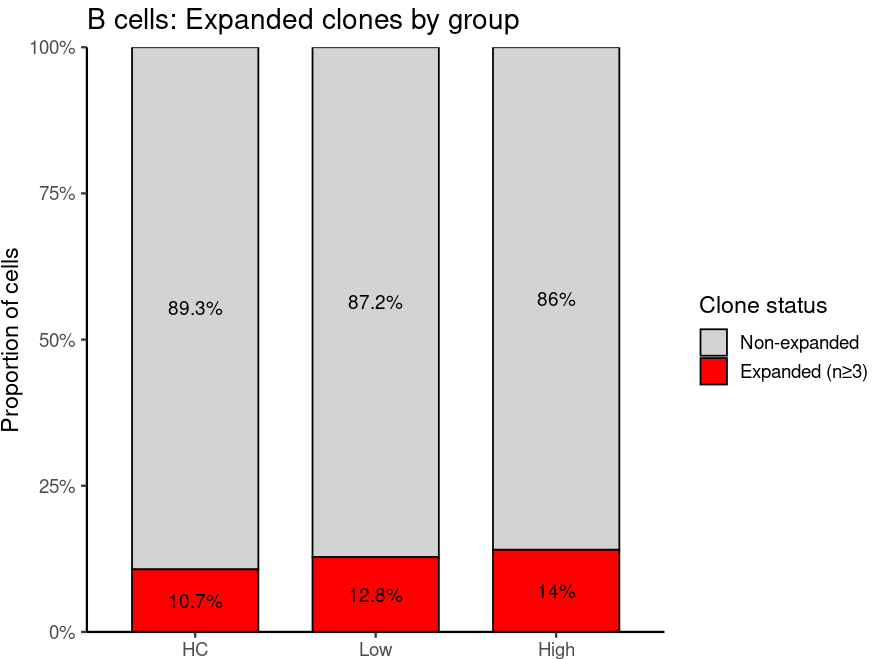
Results : In Tfh cells, pathways related to apoptosis, T-cell selection, and mRNA splicing showed monotonic decreases. Activated B cells showed monotonic decreases in mRNA splicing- and cell-cell adhesion-related pathways. In ASCs, intracellular trafficking-related pathways increased, whereas apoptosis-related pathways decreased monotonically. Clonal expansion was observed only in B-cell compartments, with no expanded clones detected in Tfh cells. The proportion of expanded clones increased across HC, low-Gd-IgA1, and high-Gd-IgA1 groups. Expanded clones in activated B cells were enriched for apoptosis- and mRNA splicing-related pathways, whereas expanded ASC clones showed decreased enrichment of antigen processing, mRNA splicing, and apoptosis-related pathways. In ASCs, both Gd-IgA1-associated and expanded clone-associated analyses showed decreased enrichment of apoptosis-related pathways.
Conclusions : Cell type-specific transcriptional changes were observed across Gd-IgA1–stratified groups, with stepwise increases in expanded B-cell clones. In ASCs, decreased enrichment of apoptosis-related pathways was observed in both Gd-IgA1-associated and expanded clone-associated analyses. These findings suggest that B-cell clonal expansion may contribute to Gd-IgA1-associated immune responses in IgAN, particularly through shared apoptosis-related pathway alterations in ASCs.
Methods : Cells of interest were sorted with fluorescence-activated cell sorting. T follicular helper (Tfh) cells, activated B cells, and antibody-secreting cells (ASCs) from 12 IgAN patients and 6 healthy controls (HC) were profiled by 5′ single-cell RNA sequencing with paired V(D)J analysis. IgAN samples were stratified into low- and high-Gd-IgA1 groups (n=6 each). Differential expression (DE) analyses identified monotonic changes across HC, low-Gd-IgA1, and high-Gd-IgA1 groups and compared expanded (clone size ≥3) versus non-expanded clones within each cell type. Shared pathways between Gd-IgA1-associated monotonic DEGs and expanded clone-associated DEGs were then assessed.
Results : In Tfh cells, pathways related to apoptosis, T-cell selection, and mRNA splicing showed monotonic decreases. Activated B cells showed monotonic decreases in mRNA splicing- and cell-cell adhesion-related pathways. In ASCs, intracellular trafficking-related pathways increased, whereas apoptosis-related pathways decreased monotonically. Clonal expansion was observed only in B-cell compartments, with no expanded clones detected in Tfh cells. The proportion of expanded clones increased across HC, low-Gd-IgA1, and high-Gd-IgA1 groups. Expanded clones in activated B cells were enriched for apoptosis- and mRNA splicing-related pathways, whereas expanded ASC clones showed decreased enrichment of antigen processing, mRNA splicing, and apoptosis-related pathways. In ASCs, both Gd-IgA1-associated and expanded clone-associated analyses showed decreased enrichment of apoptosis-related pathways.
Conclusions : Cell type-specific transcriptional changes were observed across Gd-IgA1–stratified groups, with stepwise increases in expanded B-cell clones. In ASCs, decreased enrichment of apoptosis-related pathways was observed in both Gd-IgA1-associated and expanded clone-associated analyses. These findings suggest that B-cell clonal expansion may contribute to Gd-IgA1-associated immune responses in IgAN, particularly through shared apoptosis-related pathway alterations in ASCs.
Figure1.PNG
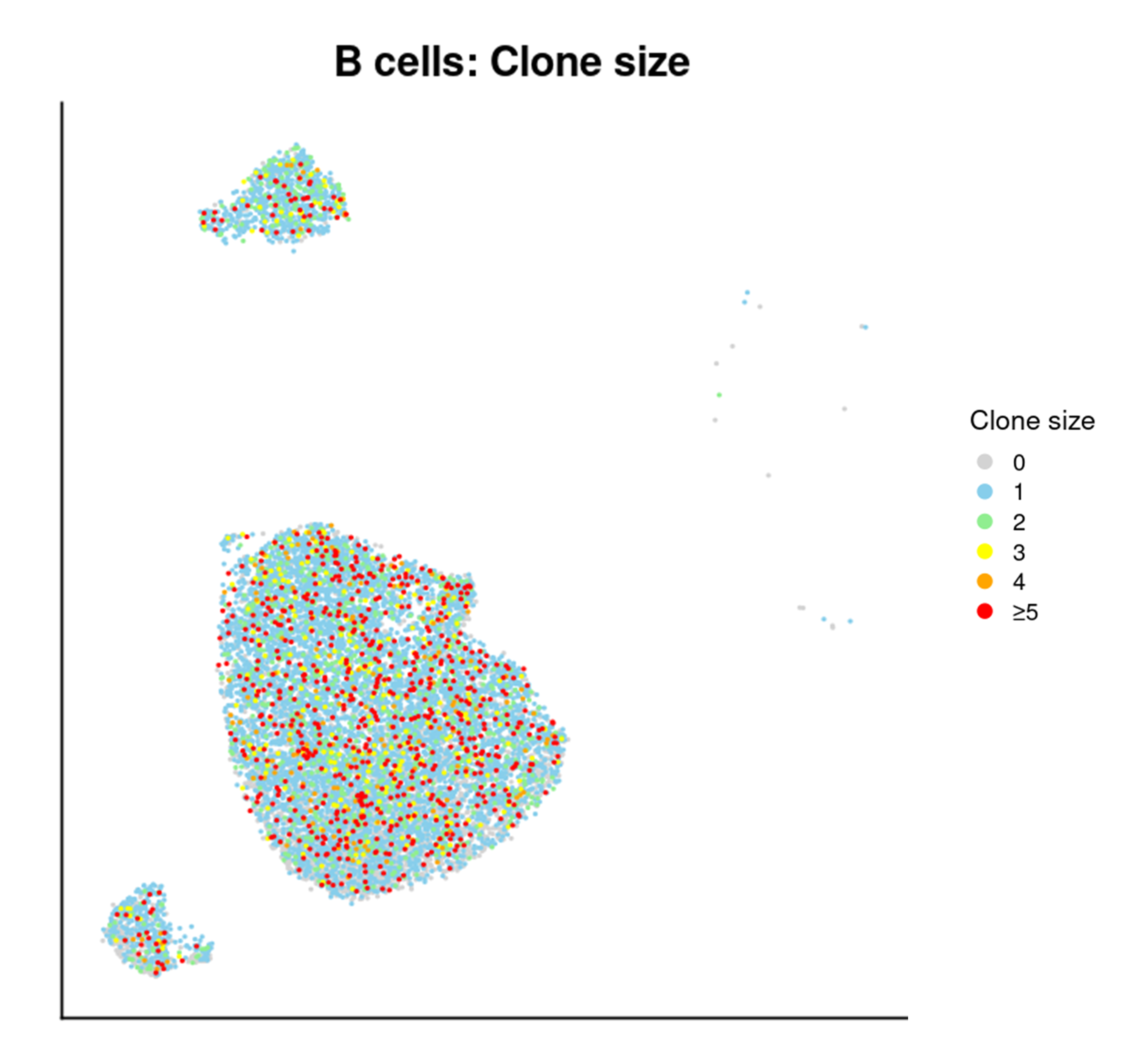
Figure1.PNG