Abstract Type : Oral presentation
Abstract Submission No.: A-0287
Abstract Topic : Glomerular and Tubulointerstitial Disorders
Single-Cell Transcriptomics Identifies CD8 T-Cell Differentiation Signatures in Early IgA Nephropathy
Soojin Lee1, Gwanghun Kim5, Sehoon Park2, Ara Ko2, Semin Cho4, Yaerim Kim3, Hyun Mu Shin 5, Hang-Rae Kim6, Dong Ki Kim2
1Department of Internal Medicine-Nephrology, Eulji University Hospital, Korea, Republic of
2Department of Internal Medicine-Nephrology, Seoul National University Hospital, Korea, Republic of
3Department of Internal Medicine-Nephrology, Keimyung University Dongsan Medical Center, Korea, Republic of
4Department of Internal Medicine-Nephrology, Chung-Ang University Gwangmyeong Hospital, Korea, Republic of
5Department of Biomedical Sciences, Seoul National University College of Medicine, Korea, Republic of
6Department of Health Sciences and Technology, Samsung Advanced Institute for Health Sciences & Technology (SAIHST), Sungkyunkwan University, Korea, Republic of
Methods : Peripheral blood samples were obtained from 17 biopsy-proven IgAN patients and 9 healthy controls. Patients were classified into early- and late-stage groups based on estimated glomerular filtration rate and urine protein-to-creatinine ratio. Single-cell RNA sequencing was performed with peripheral blood mononuclear cells to characterize immune cell composition and CD8⁺ T-cell differentiation status. Differences according to the disease stages were evaluated using donor specific statistical modeling and pseudo-bulk analyses with covariate correction.
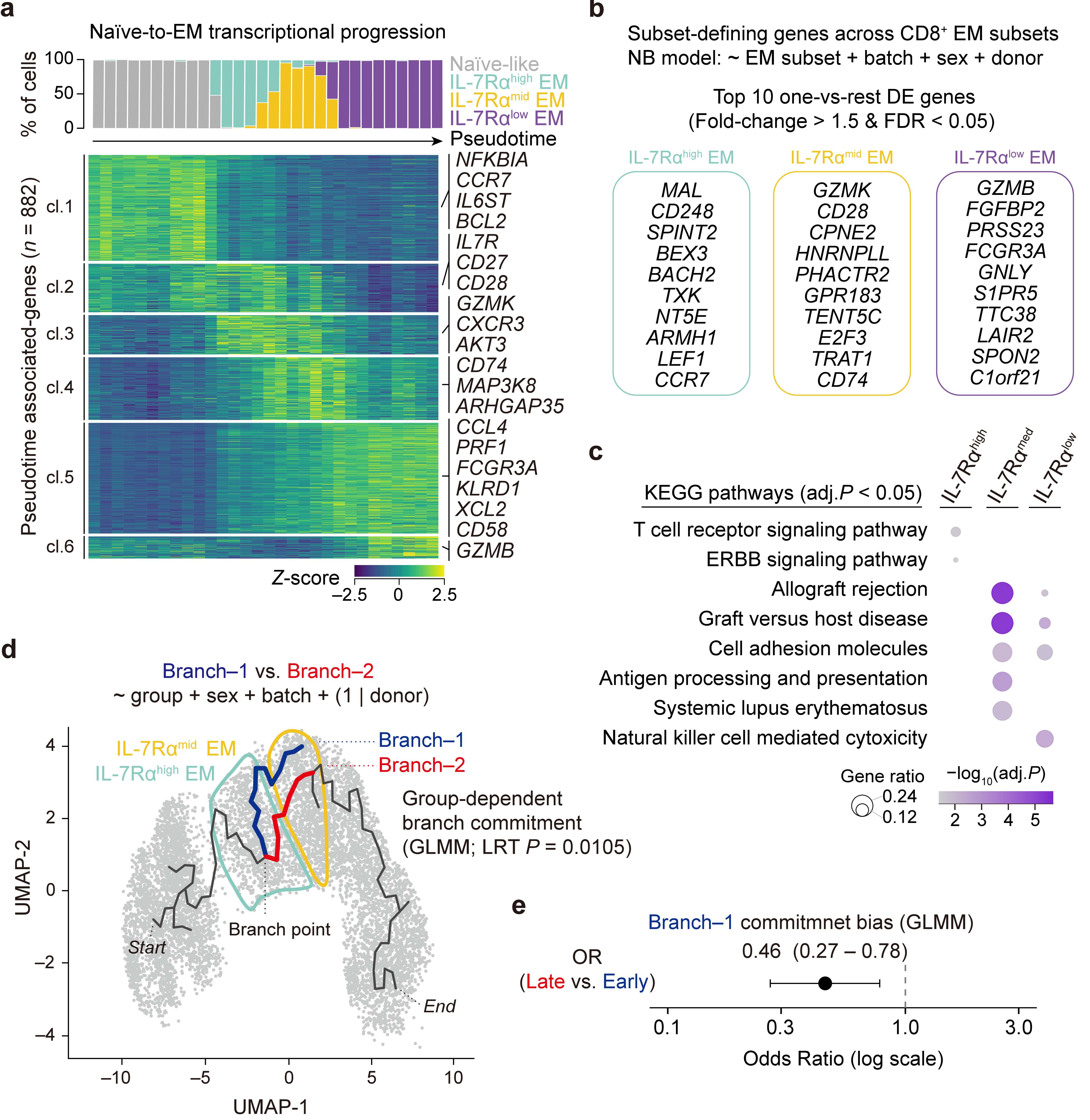
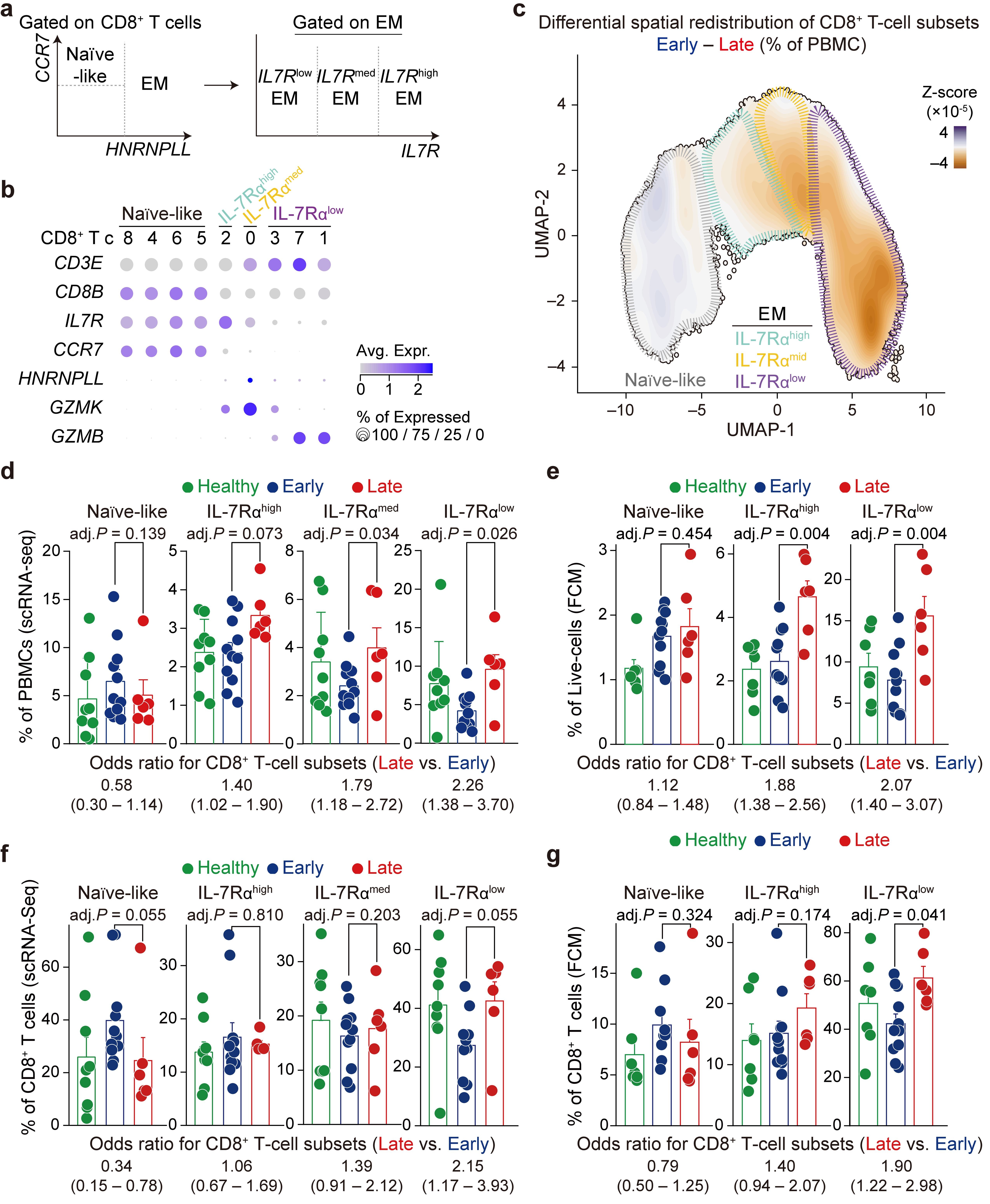
Results : Single-cell RNA sequencing revealed stage specific redistribution of CD8⁺ T-cell subsets (Figure 1). Early-stage IgAN was characterized by enrichment of IL-7Rahigh and IL-7Ramed effector memory CD8⁺ T cells, whereas late-stage disease exhibited enrichment of IL-7Ralow subsets. Branch-level differentiation demonstrated CD8⁺ T-cell commitment patterns according to the disease status (Figure 2). Although only a limited number of individual genes reached statistical significance after covariate adjustment, pathway analyses revealed coordinated transcriptional signatures associated with immune activation in early-stage disease and cytotoxic differentiation in advanced status. CD4⁺ T cells, B cells, and NK cells exhibited limited stage-specific alterations.
Conclusions : The present study showed stage specific redistribution of CD8⁺ T-cell subsets and pathway-level immune remodeling differentiation in early-stage IgAN. The results highlighted the insight into immune dynamics associated with disease progression and identified candidate pathways that warrant further investigation for risk stratification and precision-based management strategies.
Abs Fig 1.jpg
Abs Fig 1.jpg