Abstract Type : Oral presentation
Abstract Submission No.: A-0269
Abstract Topic : Basic Research
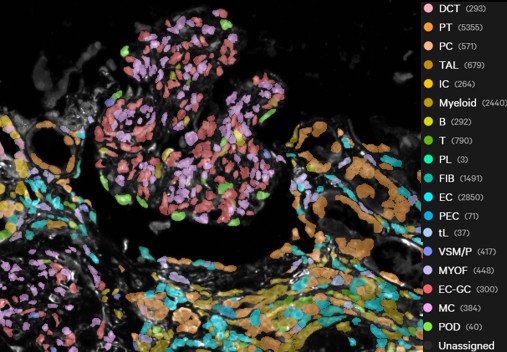
A Single-Cell-Resolution Spatial Transcriptomic Atlas of Human Glomerular Diseases
Jae-ik Oh1, Hyunah Ku2, Sehoon Park1, Kyung Chul Moon3, Seung Seok Han1, Hajeong Lee1, Hyun Je Kim2, Dong Ki Kim1
1Department of Translational Medicine, Seoul National University College of Medicine, Korea, Republic of
2Department of Biomedical Sciences, Seoul National University Graduate School, Korea, Republic of
3Department of Pathology, Seoul National University Hospital, Korea, Republic of
Objectives : Spatial transcriptomics is essential for understanding the complex cellular microenvironment and intercellular interactions underlying kidney diseases. To overcome the limitations of conventional dissociated single-cell analysis, we constructed an ultra-high-resolution spatial transcriptomic atlas of large-scale clinical kidney biopsies using the Xenium In Situ 5K panel combined with a kidney-specific custom panel.
Methods : The spatial assay utilized the commercially available Prime 5K panel as a foundation, supplemented by a custom add-on panel targeting 126 highly specific genes. This custom panel was strategically designed in close collaboration with the Kidney Precision Medicine Project to ensure robust clinical relevance. The specifically added categories encompass key cellular markers for podocytes, proximal tubules, lymphatic endothelial cells, and interstitial cells. Furthermore, it incorporates novel transcripts identified via long-read sequencing, single-nucleus RNA sequencing markers, and disease-specific targets for diabetic nephropathy, IgA nephropathy, membranous nephropathy, and minimal change disease.
Results : We successfully generated and mapped spatial transcriptomic data from an exceptionally large cohort of 97 human kidney tissue samples. The clinical disease distribution of the samples included 25 normal controls, 24 cases of diabetic kidney disease, 24 cases of IgA nephropathy, 10 cases of membranous nephropathy, and 14 cases of minimal change disease. Initial quantitative data processing revealed an average of 35,416 cells detected per sample, successfully mapping a massive amount of single-cell data with precise spatial coordinates. Additionally, the average number of transcripts per cell was robustly measured at 120, indicating stable transcript preservation and reliable high-throughput detection within the intact tissue architecture.
Conclusions : Integrating a validated gene panel with a large-scale clinical cohort enabled unprecedented interpretation of cellular expression within its native spatial context. This comprehensive spatial transcriptomic pipeline and atlas will serve as a highly valuable resource for future kidney spatial research, ultimately facilitating the discovery of novel diagnostic biomarkers and therapeutic targets.
Methods : The spatial assay utilized the commercially available Prime 5K panel as a foundation, supplemented by a custom add-on panel targeting 126 highly specific genes. This custom panel was strategically designed in close collaboration with the Kidney Precision Medicine Project to ensure robust clinical relevance. The specifically added categories encompass key cellular markers for podocytes, proximal tubules, lymphatic endothelial cells, and interstitial cells. Furthermore, it incorporates novel transcripts identified via long-read sequencing, single-nucleus RNA sequencing markers, and disease-specific targets for diabetic nephropathy, IgA nephropathy, membranous nephropathy, and minimal change disease.
Results : We successfully generated and mapped spatial transcriptomic data from an exceptionally large cohort of 97 human kidney tissue samples. The clinical disease distribution of the samples included 25 normal controls, 24 cases of diabetic kidney disease, 24 cases of IgA nephropathy, 10 cases of membranous nephropathy, and 14 cases of minimal change disease. Initial quantitative data processing revealed an average of 35,416 cells detected per sample, successfully mapping a massive amount of single-cell data with precise spatial coordinates. Additionally, the average number of transcripts per cell was robustly measured at 120, indicating stable transcript preservation and reliable high-throughput detection within the intact tissue architecture.
Conclusions : Integrating a validated gene panel with a large-scale clinical cohort enabled unprecedented interpretation of cellular expression within its native spatial context. This comprehensive spatial transcriptomic pipeline and atlas will serve as a highly valuable resource for future kidney spatial research, ultimately facilitating the discovery of novel diagnostic biomarkers and therapeutic targets.
KSN 2026 abstract Figure 1.jpg