Abstract Type : Oral presentation
Abstract Submission No.: A-0119
Abstract Topic : Acute Kidney Injury
Inhibition of Core Fucosylation by 2-Fluorofucose Attenuated Acute Kidney Injury by Modulating ERK1/2 Signaling Axis
Chenyuan Chang, Nan Shen
Department of Internal Medicine-Nephrology, The 1st Affiliated Hospital of Dalian Medical University, China
Objectives : Acute kidney injury (AKI) induced by renal ischemia-reperfusion injury (IRI) is a prevalent and life-threatening clinical condition with limited effective therapeutic options. Epithelial-mesenchymal transition (EMT) and aberrant core fucosylation are key pathological drivers of renal damage and fibrosis in IRI. Due to these pathological abnormalities in AKI patients with IRI, we intended to treat IRI-induced AKI using a core fucosylation inhibition strategy with 2-fluorofucose (2FF) in the present study.
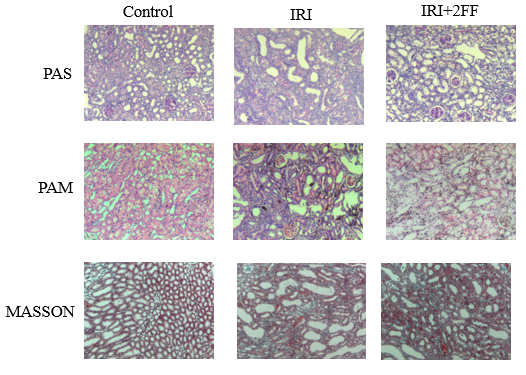
Methods : 2-Fluorofucose (2FF), an orally bioavailable fluorinated analog of fucose that is a protein fucosylation inhibitor, was employed to pretreat human renal tubular epithelial HK-2 cells and C57BL/6 mice with IRI-induced AKI using a standardized oral and in vitro administration protocol. Experiments with HK-2 cells exposed to hypoxia/reoxygenation (H/R) and IRI-AKI mice were used to evaluate the renoprotective efficiency of 2FF. Lectin blotting, mass spectrometry, Western blot, immunohistochemistry, and histopathologic staining (PAS, Masson, PAM) were performed to investigate the underlying mechanisms.
Results : 2FF treatment markedly reduced cellular core fucosylation levels in H/R-challenged HK-2 cells—specifically by downregulating fucosyltransferase 8 (FUT8) expression and inhibiting lectin LCA binding—and consequently suppressed the expression of Snail, a key transcription factor driving EMT. This downregulation of Snail further inhibited the phosphorylation of ERK1/2, which in turn upregulated E-cadherin, downregulated α-SMA, and abrogated H/R-induced abnormal cell migration. Mouse experiments confirmed these findings and demonstrated a prominent protective effect of 2FF against IRI-induced AKI, while potently inhibiting post-AKI interstitial fibrosis via the core fucosylation/ERK1/2 signaling axis.
Conclusions : This study provides an effective therapeutic option for IRI-induced AKI by applying orally available 2-fluorofucose (2FF) to inhibit aberrant core fucosylation and subsequent epithelial-mesenchymal transition (EMT), as well as impede ERK1/2-mediated renal injury and fibrosis, rendering it a promising candidate for AKI treatment.
Methods : 2-Fluorofucose (2FF), an orally bioavailable fluorinated analog of fucose that is a protein fucosylation inhibitor, was employed to pretreat human renal tubular epithelial HK-2 cells and C57BL/6 mice with IRI-induced AKI using a standardized oral and in vitro administration protocol. Experiments with HK-2 cells exposed to hypoxia/reoxygenation (H/R) and IRI-AKI mice were used to evaluate the renoprotective efficiency of 2FF. Lectin blotting, mass spectrometry, Western blot, immunohistochemistry, and histopathologic staining (PAS, Masson, PAM) were performed to investigate the underlying mechanisms.
Results : 2FF treatment markedly reduced cellular core fucosylation levels in H/R-challenged HK-2 cells—specifically by downregulating fucosyltransferase 8 (FUT8) expression and inhibiting lectin LCA binding—and consequently suppressed the expression of Snail, a key transcription factor driving EMT. This downregulation of Snail further inhibited the phosphorylation of ERK1/2, which in turn upregulated E-cadherin, downregulated α-SMA, and abrogated H/R-induced abnormal cell migration. Mouse experiments confirmed these findings and demonstrated a prominent protective effect of 2FF against IRI-induced AKI, while potently inhibiting post-AKI interstitial fibrosis via the core fucosylation/ERK1/2 signaling axis.
Conclusions : This study provides an effective therapeutic option for IRI-induced AKI by applying orally available 2-fluorofucose (2FF) to inhibit aberrant core fucosylation and subsequent epithelial-mesenchymal transition (EMT), as well as impede ERK1/2-mediated renal injury and fibrosis, rendering it a promising candidate for AKI treatment.
Figure1.jpg
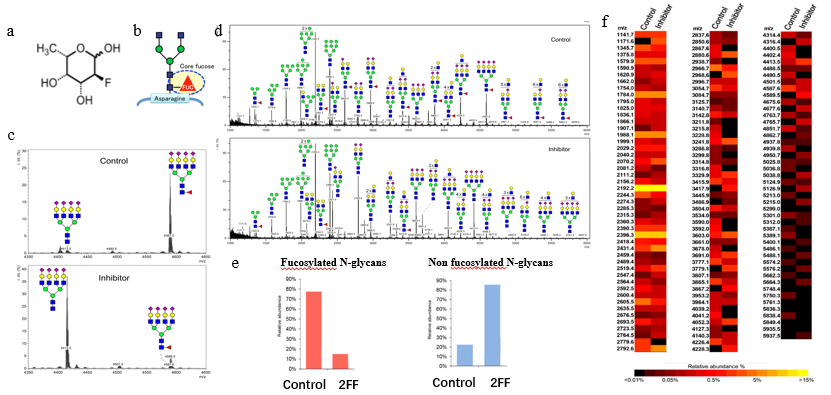
Figure1.jpg